Cooling Foods
Hazards when Cooling
The hazards associated with cooling include the multiplication of food poisoning bacteria not destroyed during cooking, the production of toxins, the germination of spores and the contamination of food by micro-organisms, foreign bodies or chemicals.
The time between refrigeration and cooking (or processing), cooking and refrigeration, and refrigeration and serving must be kept as short as possible.
Safe Cooling Practices
- Use of Blast Chiller
- Use of designated cooling area.
- Use of ice baths.
- Dividing into small portions and cooling in shallow trays/ containers.
- Decanting into shallow containers.
Use a blast chiller to chill down food especially if you chill lots of food in your business. A blast chiller is specially designed to chill hot foods quickly and safely.
Divide food into smaller portions. Smaller amounts of food cool down more quickly.
Pour hot liquids or sauces into larger containers. The surface area will be increased and therefore the liquids will cool down more quickly.
Place containers of hot food in cold water/ice bath. The cold water/ice bath makes the contents of the containers cool more quickly.
While food is cooling down, stir regularly with a clean utensil. Stirring helps food cool more evenly.
Move hot food to a colder area (e.g., a larder). Food will cool more quickly in a colder place.
Some ovens have a ‘cool’ setting, which can help to cool down food by increasing the airflow around it (however, the oven should be cool first).
Food cooled down for further use needs to be cooled rapidly to avoid the possibility of multiplication of any pathogenic bacteria which may be present. The maximum recommended time from cooking to refrigeration 120 minutes.
For large joints, target is to achieve 2°C after 6 hours when chilled (maximum weight of joints is recommended not to exceed 2.5 kg).
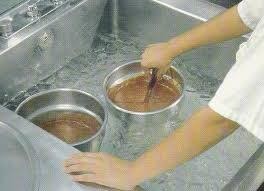
Sauces and stews can be decanted into smaller portions using clean and disinfected shallow containers. Rice, pasta, vegetables and potatoes can be cooled using cold running drinkable water. Bagged joints can be sprayed with cold water. Hot food should not be placed into a refrigerator if this would raise the temperature of food already being stored above 5°C. It may also encourage condensation. However once food has cooled for 2 hours, it may be placed in a large walk-in chiller, if the air temperature of the chiller in unaffected and there is no risk of contamination.
During cooling, food should be covered and completely separate from raw food. When cooled food must be stored below 5°C.