Verification
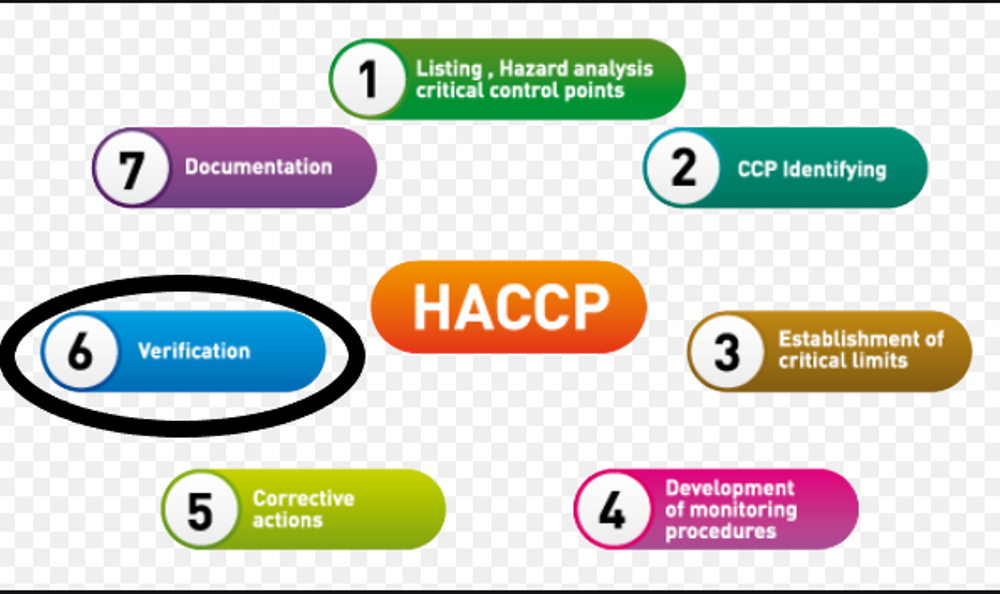
The Codex guidelines define verification as "the application of methods, procedures, tests and other evaluations, in addition to monitoring to determine compliance with the HACCP plan". Verification and auditing methods, procedures and tests, including random sampling and analysis, can be used to determine if the HACCP system is working correctly.
Review and correct the system periodically and whenever changes are made to operation and processes, e.g. when replacing an oven verify that the time/temperature settings in the new oven achieves the minimum safe cooking temperature for a particular dish by probing the food.
Verification evaluates the effectiveness of the HACCP plan. It is always necessary to check the accuracy of the HACCP system and that the HACCP system is being complied with.
Verification procedures include:
- Audits of HACCP and HACCP records.
- Inspection of the operation.
- Confirmation that CCP's are kept under control.
- Review of deviations and corrective actions.
Validation is the act of assessing whether the HACCP plan for the process adequately identifies and controls all significant food safety hazards or reduces them to an acceptable level. Each part of a HACCP plan is validated to ensure that what is being done will achieve the safety of all food produced. When a HACCP plan is validated, that means that it can be demonstrated that what has been written and put in place can actually prevent, eliminate or reduce the hazards that have been identified to the appropriate levels.
HACCP plan validation should include:
- Review of the hazard analysis.
- CCP determination.
- Justification for Critical Limits, based for example, on current regulatory requirements.
- Determination of whether monitoring activities, corrective actions, record keeping procedures and verification activities are appropriate and adequate.
HACCP plan validation is an ongoing, periodic procedure. Validations may be scheduled at a pre-set frequency. However, other factors may trigger a review of the plan to determine if changes are necessary. These factors could include changes to raw materials, product or process, adverse audit findings, recurring deviations, new scientific information about potential hazards or control measures, and consumer complaints
Verification activities should be carried out by a person who is not responsible for monitoring the activities of the food operation. Verification may be carried out by using a two step approach whereby some of the activities are verified frequently and other are verified on a less frequent basis or even annually.
The food business operator must ensure that all verification activities are carried out as defined in order to demonstrate that the HACCP plan is being implemented as planned.
Frequent verification shall include but is not limited to conforming the following:
- Are food hygiene requirements correctly implemented?
- Is the monitoring of CCPs being carried out as defined in HACCP plan?
- Is the corrective action being taken when critical limits are exceeded?
- Are visual methods of monitoring being carried out correctly?
- Where used, are visual methods of monitoring being verified?
- Are the required records being completed correctly?
Infrequent verification shall include but is not limited to confirming the following:
- Are all the food activities included in the plan?
- Is the equipment used for monitoring calibrated?
- Are the records of training, pest control, etc. satisfactory?
- Have all audit findings been acted upon and/or resolved?