Nuts
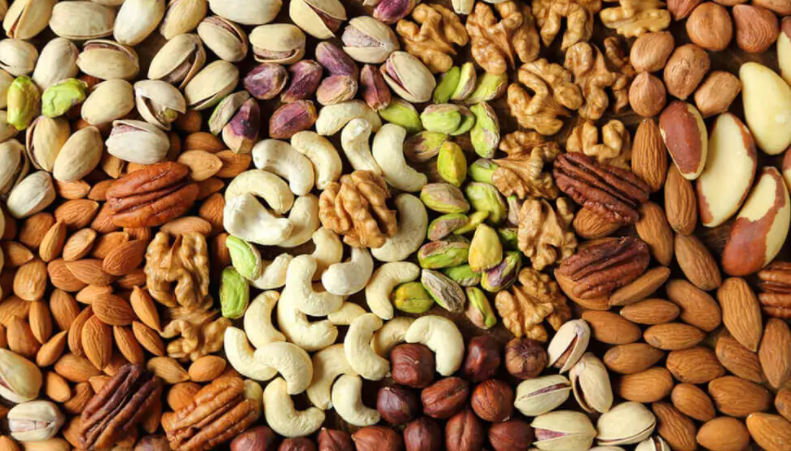
Nuts, namely: almonds (Amygdalus communis L.), hazelnuts (Corylus avellana), walnuts (Juglans regia), cashews (Anacardium occidentale), pecan nuts (Carya illinoinensis (Wangenh.) K. Koch), Brazil nuts (Bertholletia excelsa), pistachio nuts (Pistacia vera), macadamia or Queensland nuts (Macadamia ternifolia), and products thereof, except for nuts used for making alcoholic distillates including ethyl alcohol of agricultural origin.
A nut allergy in the stricter sense is an allergy to tree nuts. These include hazelnuts, walnuts, macadamia nuts and chestnuts. However, nut-like seeds and pits from stone fruits and capsules also have the potential to trigger nut allergies. Some examples are pistachios, pecans, almonds, cashews, Brazil nuts and pine nuts. In food shops, edible nuts and seeds are often sold together in the same category.
The prevalence of specific nut allergies varies widely according to region. In Europe, most people with tree nut allergies are allergic to hazelnuts, while in the U.S., walnuts and cashews are the tree nuts that most frequently trigger allergic reactions. At the global level, almonds, Brazil nuts, cashews, hazelnuts, macadamia nuts, pecans, pistachios and walnuts cause the most allergic reactions.
Scientific studies have demonstrated that around 1.4% of the European population is allergic to nuts.
In primary food allergies, the patient experiences an immediate allergic reaction to certain proteins (protein compounds) in the nut, usually storage proteins. These proteins are important for the growth of the plant and are so stable that they cannot be altered by heat or stomach acid. Primary food allergies appear most frequently in childhood.
The allergy-triggering proteins of one type of nut are often similar to the protein structures of other nuts. If the immune system of a person who is allergic to certain nut proteins comes into contact with other nut proteins, an immune reaction may be triggered by these nuts as well due to the similarity.
Nuts or traces of nuts can be found in a wide range of food products. These include bread, bread rolls, cakes, tarts, ice cream, cookies, crackers, salty snacks, baking mixes, muesli, cereal bars, spreads and sweets, and also ready meals such as potato mash, potato croquettes, cheese dishes, prepared mince in the form of burgers patties, and breaded fish.
Symptoms
Nut allergy symptoms usually appear within a few minutes of consumption. In some individuals, skin contact with the allergen is enough to trigger an allergic reaction. Symptoms can affect the breathing, skin and mucous membranes, eyes, digestive tract or the cardiovascular system and, in the most severe case, trigger an anaphylactic reaction. Nut allergy symptoms are similar to those of a peanut allergy.