Mustard and products thereof
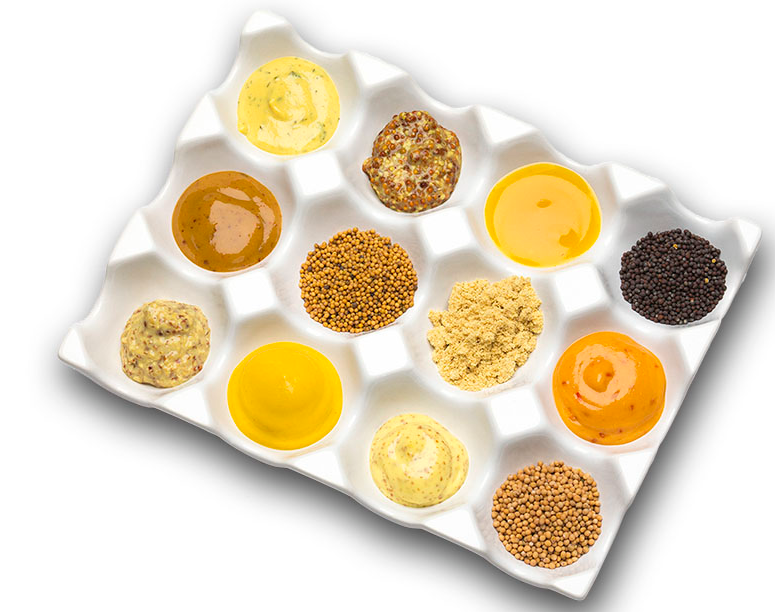
Mustard condiment is prepared from mustard seeds. It is widely used in numerous kinds of seasonings and sauces as well as in other industrial preparations and can often arise as a masked allergen leading to serious allergic reactions.
The processed foods which may contain the raw material are pickled gherkins, and small white onions, often mixed with natural seeds. Various spicy sauces, vinaigrettes, mayonnaises often contain mustard condiment. Mustard is also used as an ingredient in many ready-cooked dishes, fritters, crackers, appetizers, various flours marketed for pizzas, fritters, dehydrated products for soups. Mustard is even present in baby food. It is a contaminant of hot-dogs (even without mustard), simply because of the salesmen's handling them.
Symptoms
The symptoms are those of every food allergy to potent food allergens: anaphylactic shock, exercise-induced anaphylaxis, serious systemic reactions of immediate type (urticaria, angioedema, asthma), rhinitis, atopic dermatitis in children, abdominal pain and diarrhoea, contact dermatitis in salad makers, contact urticaria for workers in food factories.
Cross-reactivity
Cross-reactions have been rarely reported. Historically, the use of cataplasms was shown to induce allergy to mustard, documenting the reality of sensitization to food proteins by skin application. Single cases have been described of cross allergy to cauliflower, broccoli, coleslaw, cabbage, or to Brazil nuts, probably linked to similar allergens. A marked common reactivity has been shown between mustard and the major allergen of rapeseed.