Tips to Remember and Practice
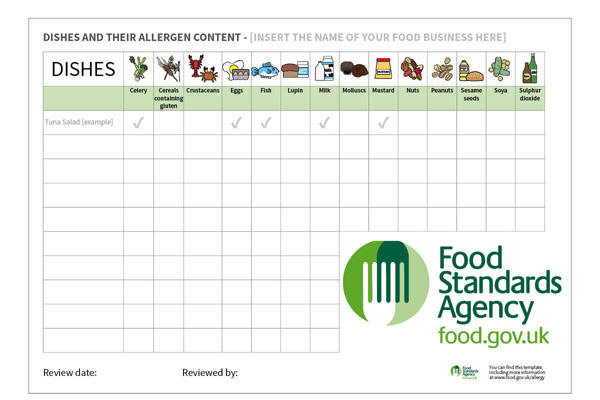
- List all the allergens used in a recipe and make sure that they are all declared in writing for that dish.
- Review the cooking methods that may introduce an allergen as an ingredient e.g., peanut oil used for frying).
- Provide and update allergen information for specials, seasonal foods, children's menus, early bird menus, afternoon tea menus, at coffee stations and on drinks menus.
- Ensure that allergens are clearly identified on the container when decanting products.
- Declare allergens in sauces, gravies, condiments and garnishes, e.g., wheat flour used to thicken gravy, soya in marinades and sauces, and anchovies, cream, or butter in sauces.
- Declare allergens in egg washes and glazes.
- Declare allergens in hot and cold drinks, such as glasses of wine, draught beer or cider, juices or smoothies, coffees and teas, etc.
- Declare the name of the cereal for cereals containing gluten, e.g., 'wheat' must be declared. 'Gluten' may also be displayed in addition but not instead.
- Declare the name of the individual nut for items containing nuts, e.g., 'almond' must be declared, not simply 'nuts.
- Check for sulphites in products such as sausages, wine, soft drinks, cordials, peeled potatoes and dried fruit.
- Make sure that your staff know what to do when ingredients or recipes change so that customers are not put at risk.