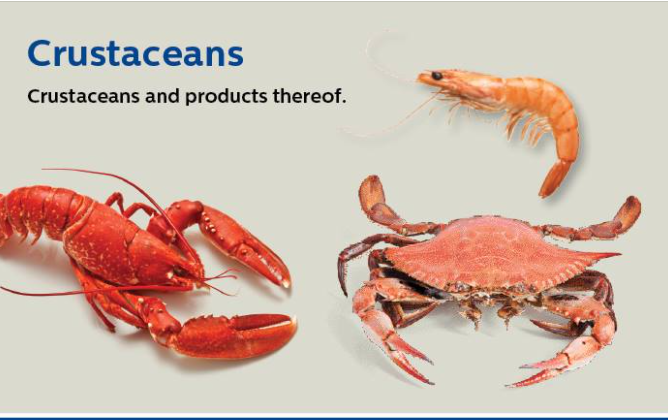
Crustaceans and products thereof
Examples of Crustaceans
- Barnacle
- Crab
- Crawfish (crawdad, crayfish, ecrevisse)
- Krill
- Lobster (langouste, langoustine, Moreton bay bugs, scampi, tomalley)
- Prawns
- Shrimp (crevette, scampi)
Around 0.1 per cent of the European population demonstrates an allergic reaction to crustaceans and/or to molluscs in provocation tests. There is a higher prevalence of allergies in countries where a lot of seafood is consumed. Allergies to crustaceans and molluscs are among the most common food allergies in Scandinavia, Portugal and Spain.
The main allergens in crustaceans and molluscs are called tropomyosins. These proteins are essential for muscle movement. They are not destroyed by heat, which means that both raw and cooked crustaceans and molluscs can provoke allergies.
While an allergic reaction is usually triggered when crustaceans or molluscs are eaten, very sensitive people can develop allergy symptoms just by breathing in the steam from cooked seafood. Skin contact can also provoke allergic reactions. Fishery and food service workers are particularly vulnerable to this form of sensitisation.
Symptoms
Crustacean and mollusc allergies can cause mild or severe reactions in various organs. Symptoms range from what is called oral allergy syndrome, in which the mucosa in the mouth and throat start to tingle or swell a few minutes to hours after exposure, to anaphylactic shock accompanied by difficulty breathing and circulatory collapse.
Abdominal pain, vomiting or diarrhoea may occur. Skin reactions may also occur, including redness, itchiness or hives. In some cases, the airways are affected and allergic rhinitis or asthma symptoms can develop.
Cross-reactivity
some people who are allergic to house dust mites also develop an allergy to crustaceans and molluscs. This is because house dust mites, like crabs, belong to the phylum of arthropods and have tropomyosins. In individuals who are already sensitised to house dust mite tropomyosins, the proteins of the crustaceans and molluscs, which are similar in structure, are considered dangerous by the immune system. The food allergy then develops in addition to the house dust mite allergy. Sometimes the order is reversed, and a house dust mite allergy develops after the crustacean or mollusc allergy.